
Chrissy Eckard
K – 6th Grade
Textbook: Step by Step Book 1
Play It! Classical Music: A Superfast Way to Learn Awesome Music on Your Piano or Keyboard
Play It! Children’s Songs: A Superfast Way to Learn Awesome Songs on Your Piano or Keyboard
Materials: Travel Piano: 61 key Vevor, black or white. Please do not get the larger one.
Supply Fee: $35 per year Please make checks payable to OKHSA
Length: 1 hour Class
Class Description: Weekly Lesson Objectives for First Semester:
Unit 1:
• Familiarity with the black and white keyboard landscape.
• Aural discrimination of high and low sounds as well as loud and quiet.
• Music term “Piano” means quiet or soft.
• Quarter note, half note and the beat values of these symbols in common time.
• Keeping the beat with rhythm instruments and on the piano.
• Distinguishing left and right hands.
• Finger numbers for playing keyboard.
• Introduction to basic songs.
• Introduction to pre-Staff note reading by patterns.
Unit 2:
• Play pre-Staff note patterns on the keyboard.
• Review all concepts from Unit 1.
• Introduce characters for C, D, and E and their location on the keyboard.
• Play simple songs with these notes.
• Aural discrimination of high, middle and low sounds.
• Music terms “Piano” and “Forte.”
• Identify simple rhythms.
• Introduction to two Solfege terms.
Unit 3:
• Clap back simple rhythms.
• Review all previous concepts.
• Add characters for F and G and their location on the keyboard.
• Play simple songs with these notes.
• Eighth notes and their beat value in common time.
• Addition to Solfege terms.
• Proper hand and finger position at the piano.
• Addition to pre-Staff note patterns and playing them on the keyboard.
• Identify pre-Staff note patterns by ear.
Unit 4:
• Review all concepts.
• Add characters for A and B and their location on the keyboard.
• Play simple songs with these and other notes.
• Whole notes and the quarter rest with beat value in common time.
• Addition to dynamic terminology.
• Proper hand position and fingering for the music scale.
• Addition to pre-staff note patterns, playing these patterns on the keyboard and identifying them by ear.
• Introduction of staff reading using patterns.
• Identify line and space notes.
Unit 5:
• Review all concepts.
• Introduce Treble and Bass clefs together with the Grand Staff.
• Emphasize character to letter and letter to placement on keyboard.
• Introduce the dotted quarter note and its’ beat value in common time.
• Addition to dynamic music terminology.
• Fingering for the C major scale.
• Introduce time signature and measures divided by bar blinds.
• Addition to more note patterns, playing them on the keyboard and identifying them by ear.
• Learn to read these patterns on the staff.
• Introduce simple methods of composition.
• Read music on the staff by pattern.
2nd Semester
We will add Step by Step Book 1. We usually do a recital in April, time permitting!
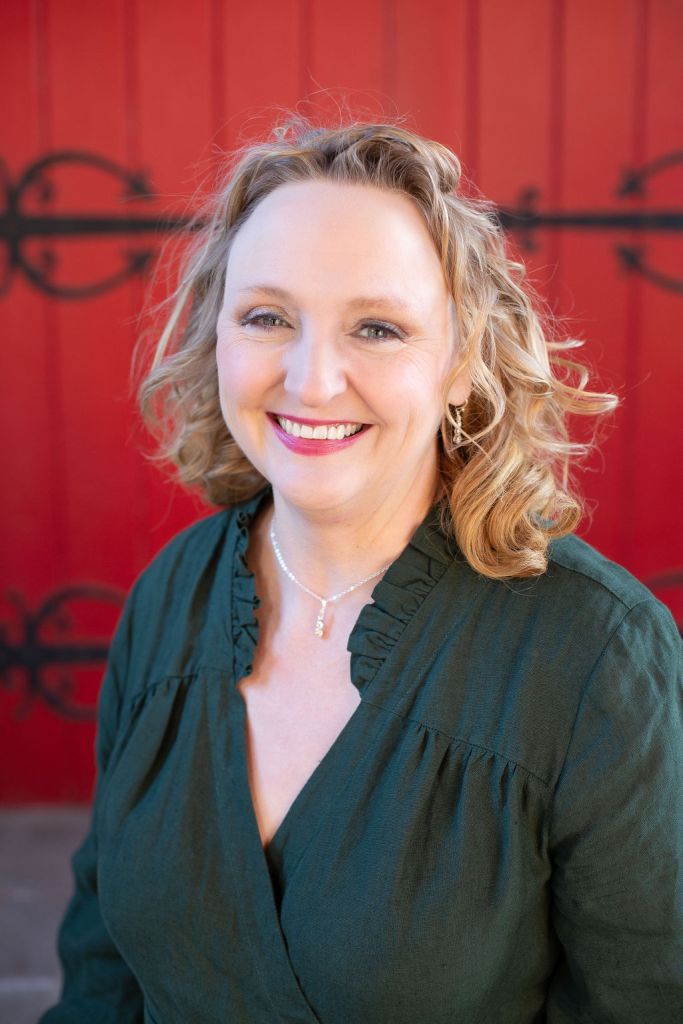
Teacher Biography: Hi! My name is Chrissy Eckard. Watching people of all ages and abilities (including special needs) discover and re-discover their creativity has been a joy of mine since high school. I’ve taught piano since 1993 and art since 2017. I love working with people of all ages to help them nurture their creativity and find joy and relaxation in their day. Over the years, I’ve developed my own approach and curriculum, helping EVERY child by customizing methods so ALL may engage in the joy of creating art and music!
Some fun things about me- I married my favorite opera singer last summer, I have two adult children; am most inspired by Fred Rogers, collect black label vintage Jessica McClintock Gunne sax dresses, love Romero Britto’s joyous art, and can often be found at OKCMOA!
 Grounded Oklahoma Christian Co-op